The 2026 World Cup is over, but it left an open question: what do we do with the millions of users who came for the soccer?
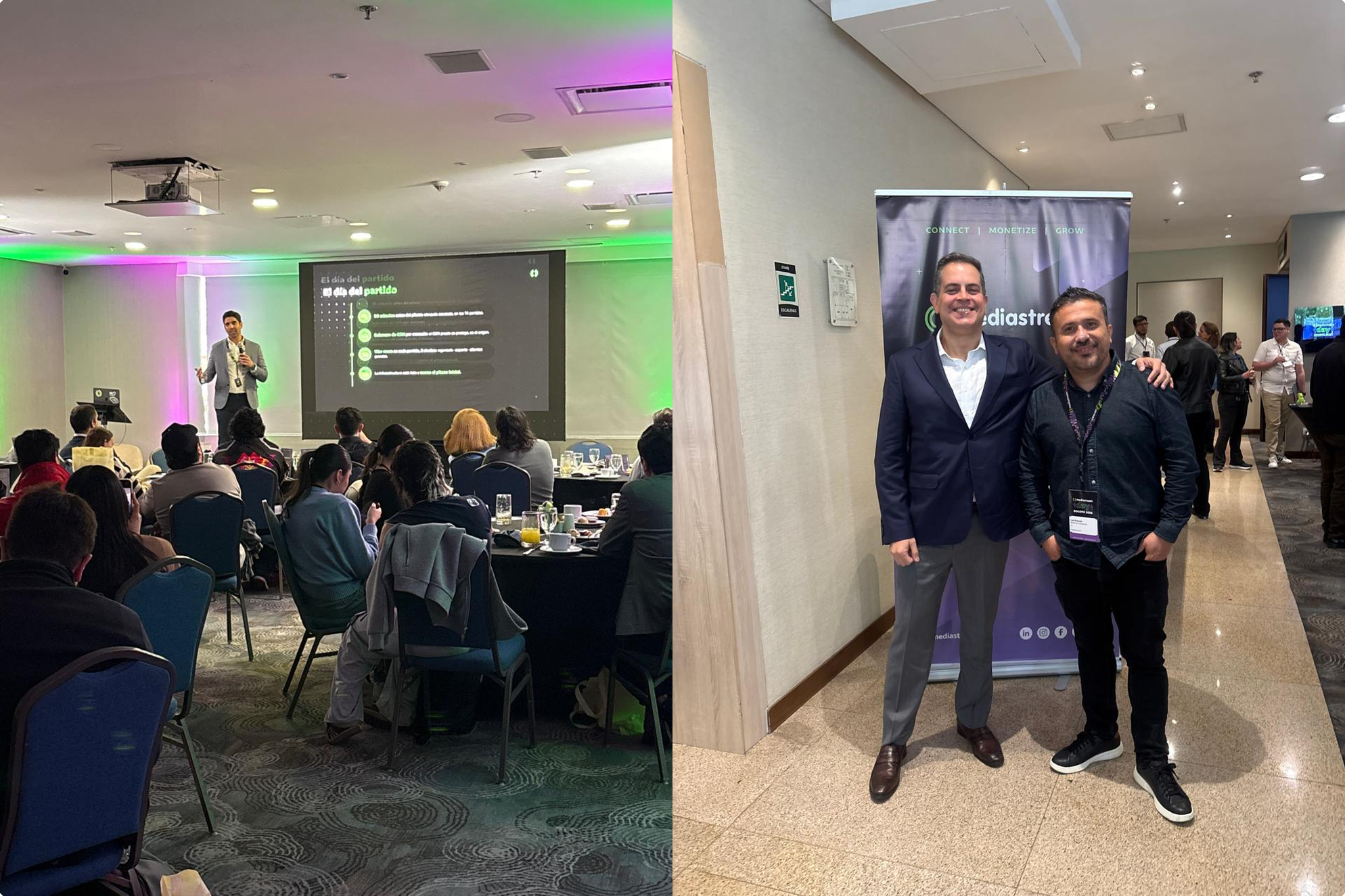
That question set the tone on November 5, when we packed the room at the DoubleTree by Hilton Parque 93 in Bogotá. It was a morning of real numbers, live demos, and candid conversation among broadcasters, platforms, and technology partners.
The Agenda
Luis Ahumada, CEO of Mediastream, opened with the state of the industry in Latin America and the company’s vision for 2027.
Fernando Cheong, CTO of Mediastream, shared the World Cup numbers: 4.7 million people watching at the same time, 101.6 million hours viewed, and a 12.7 Tbps peak. Connected TV drove 41% of viewing.
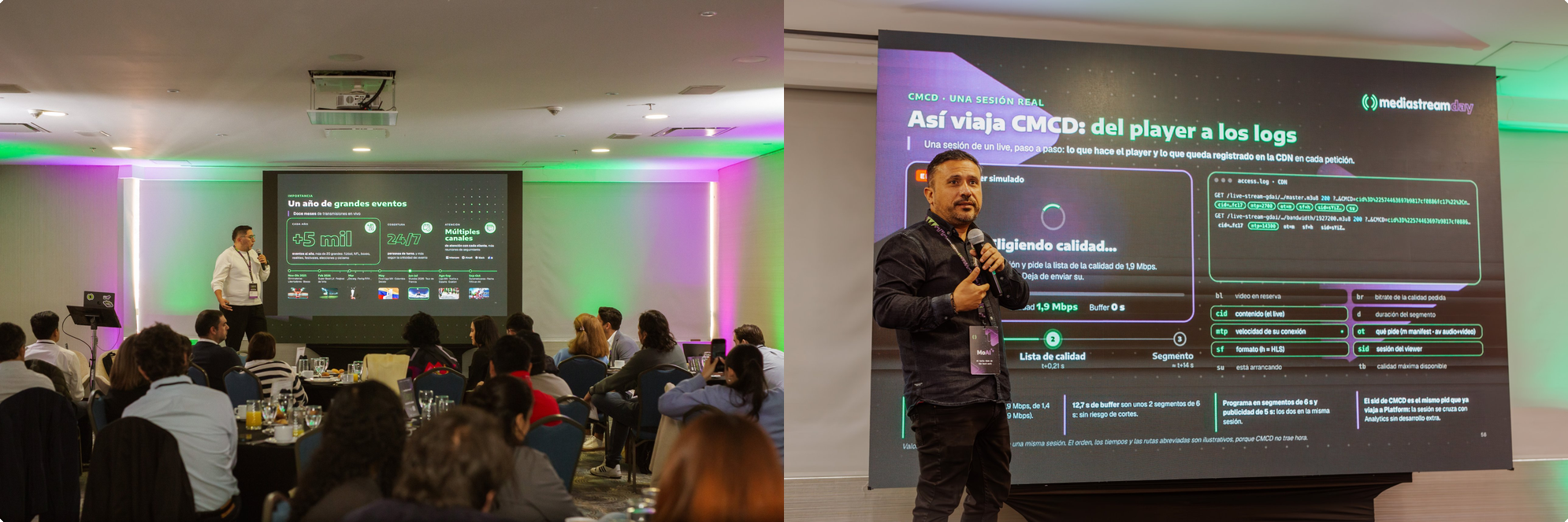
Darío Castro, Head of Operations, showed what viewers never see behind a broadcast: the preparation, the 24/7 monitoring, and the AI agents that support every event.
Felipe del Castillo, Strategic Partnerships Manager at Google, presented SGAI as the future of streaming monetization.
Demos
In Tech in Action, Fernando and Luis showed the platform running live. AI, agents, and automation are now real products:
MoAI, Mediastream MCP, and Skills: AI agents such as Claude, connected directly to Platform. In the demo, a single sentence turned an Excel file into the channel’s programming schedule.
Smart Flow Manager: workflows that automate content, metadata, and subtitles.
Production: an Adobe Premiere plugin, Vertical Reels for microdramas, Article v2.0 with assisted SEO, and thumbnails generated with MoAI.
Quality and monetization: SGAI with Google Ads, live 4K upscaling, real-time analytics, and the CMCD standard to measure each viewer’s experience.
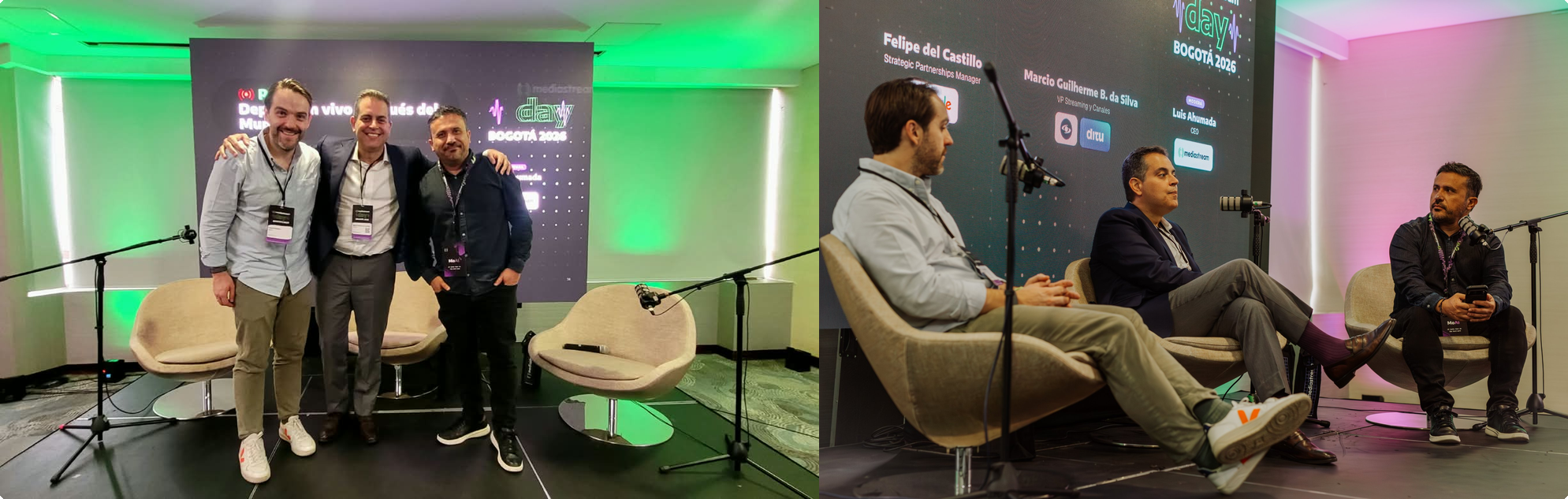
Quality drives retention. After the World Cup, DITU, Caracol’s platform, kept 20 to 25% more average users than before. As Marcio put it, sports attract and the catalog retains. That’s why Caracol is increasing its sports budget by 20% for 2027.
From peak to recurring audience. Felipe noted that a major event rarely pays for itself on game day. Its value lies in getting to know new users through first-party data and bringing them back with relevant content.
Connected TV changes the business. At DITU, TV already accounts for nearly 50% of hours viewed, with more than two hours a day per user. For advertisers, that level of attention is worth far more than a video on mobile. The challenge is building for many devices and measuring well.
The model depends on the genre. Premium and niche content go behind a subscription. Mass-audience content, like a national team match or the news, is funded by advertising.
AI is already here. Felipe highlighted agent-driven media buying, a trend that makes first-party data essential. Marcio shared that about 25% of DITU’s microdramas are already produced with AI.
What We’re Taking Away
The World Cup proved that Latin America can sustain audiences at global scale. The next challenge is turning those peaks into long-term relationships, with data, strategy, and partners pushing in the same direction.
Thank you to Marcio, Felipe, and everyone who filled the room. If you’re figuring out how to retain and monetize your audience after a major event, let’s talk.